



THIS COURSE IS CURRENTLY UNDER DEVELOPMENT – DO NOT ENROL AS CPD WILL NOT BE ALLOCATED OR UPLOADED
Course Summary
Testosterone therapy in women has been proven to improve sexual desire in carefully selected patients. It is a valid treatment in those who are distressed by their lack of sexual desire where there is no other cause obvious for this. This presentation discusses the actions of androgens in the female body, the indications for testosterone treatment and how to appropriately investigate and manage women with hyposexual desire disorder.
Learning Outcomes
- Recognise the effect of testosterone on the female body and its change with natural ageing
- Identify and investigate appropriately women in whom low libido may be improved with testosterone therapy
- Implement for and manage women who are trialling testosterone therapy
About the Speaker

Prof Rod Baber, Obstetrician and Gynaecologist
Rod Baber is Professor of Obstetrics and Gynaecology at The University of Sydney and operates a specialist Gynaecology and Reproductive Endocrinology practice based on Sydney’s lower north shore. He also heads the menopause and menstrual disorders clinic at Royal North Shore Hospital. Dr Baber is a life member and Past President Australasian menopause Society as well as Past President International Menopause Society where he is also Honorary Life Member. He is Editor-in-Chief of Climacteric, the journal of The International Menopause Society and is Associate Editor of ANZ Journal of Obstetrics and Gynaecology.
CPD Accreditation & Certificate
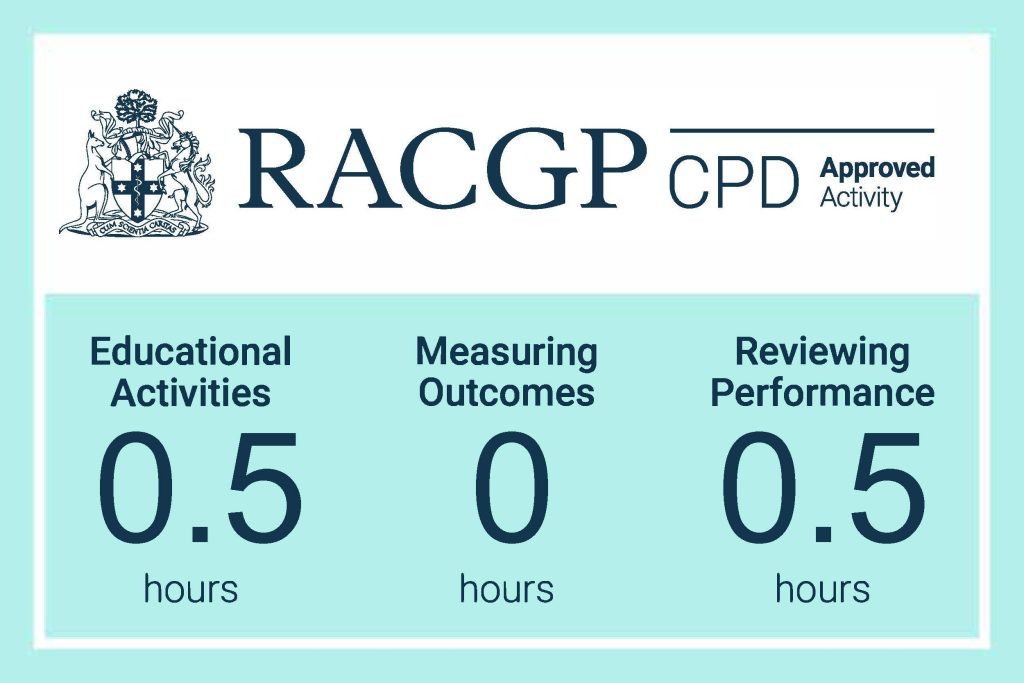

RACGP and ACRRM: This CPD module has been approved for 0.5 hours under the Educational Activities category and 0.5 hours under the Reviewing Performance category.
All learners will receive a certificate of completion that they may access from their account when the module is completed.
Proudly supported by an independent educational grant from